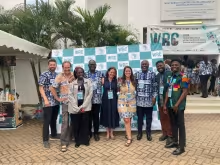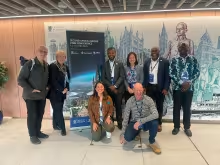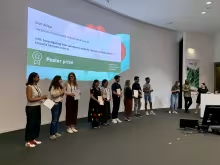
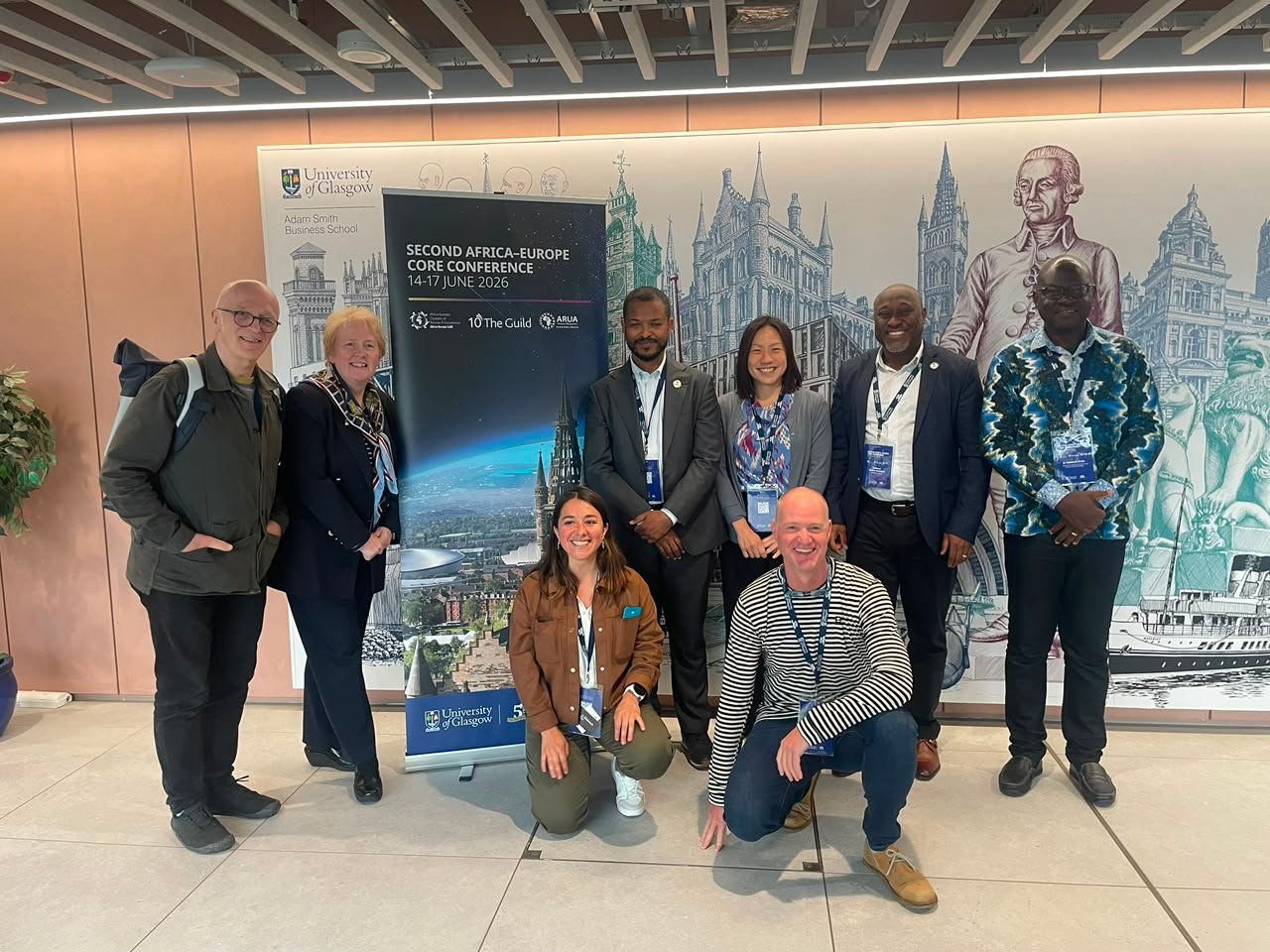
From June 14-17, 2026, the University of Glasgow, Scotland, hosted the Second Africa-Europe Clusters of Research Excellence (CoRE) Conference, bringing together university leaders, distinguished researchers, and key stakeholders from across Africa and Europe.
Held alongside the Summit of Vice-Chancellors and Presidents of the African Research Universities Alliance (ARUA) and The Guild of European Research-Intensive Universities (The Guild), the flagship conference highlighted the important role of universities in advancing impactful research, strengthening international partnerships, and developing collaborative solutions to shared global challenges.
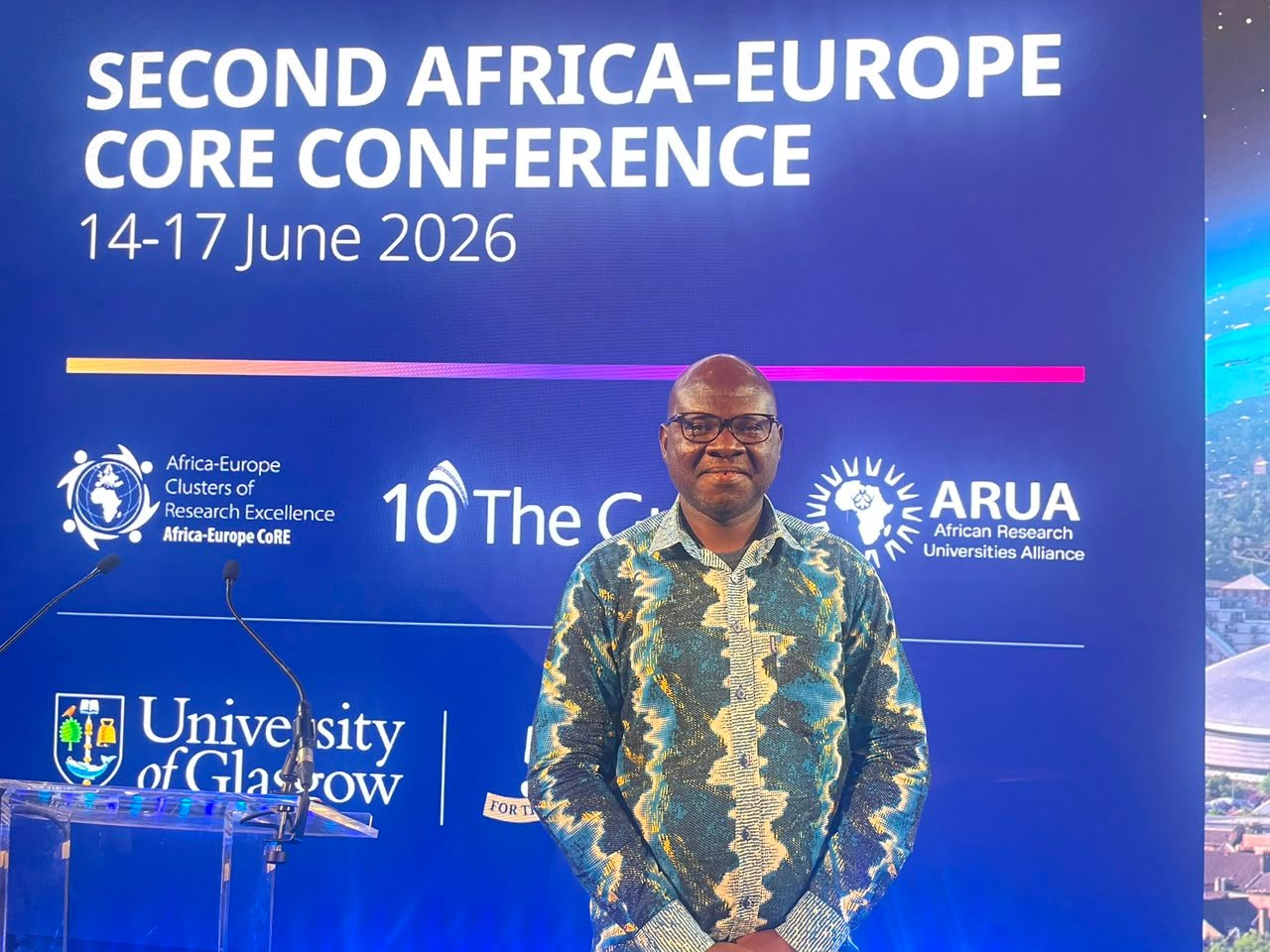
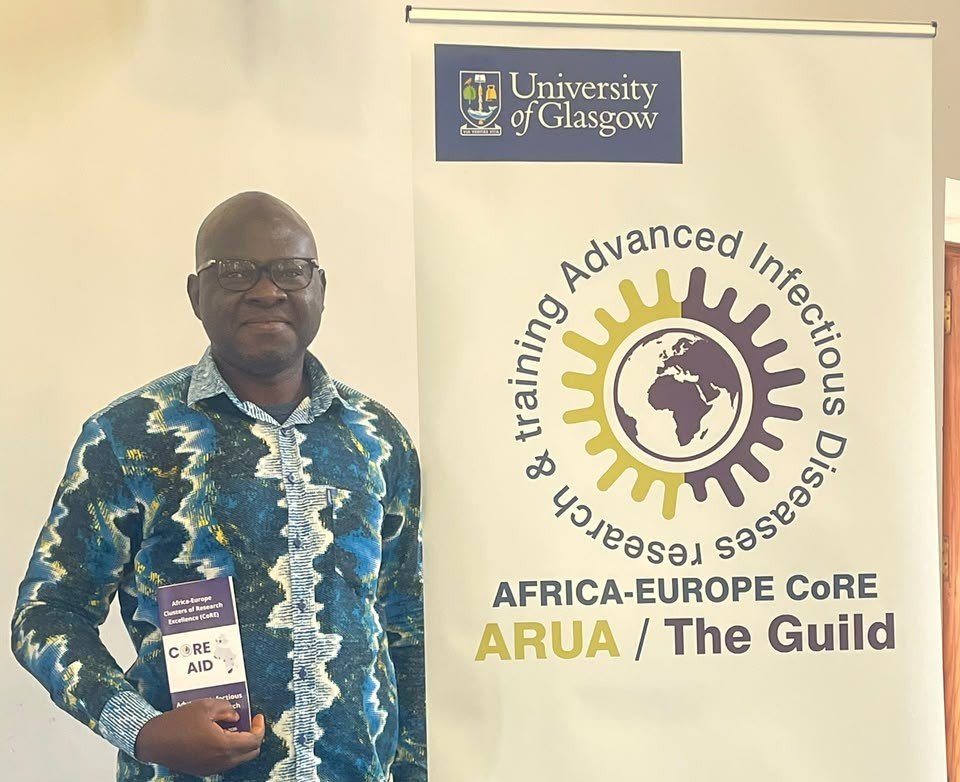
Representing the Kwame Nkrumah University of Science and Technology (KNUST) on the ARUA side, LITD Team Leader Dr Bismarck Dinko participated in the conference as a partner of the CoRE AID (Advanced Infectious Diseases Research and Training) Cluster of Research Excellence.
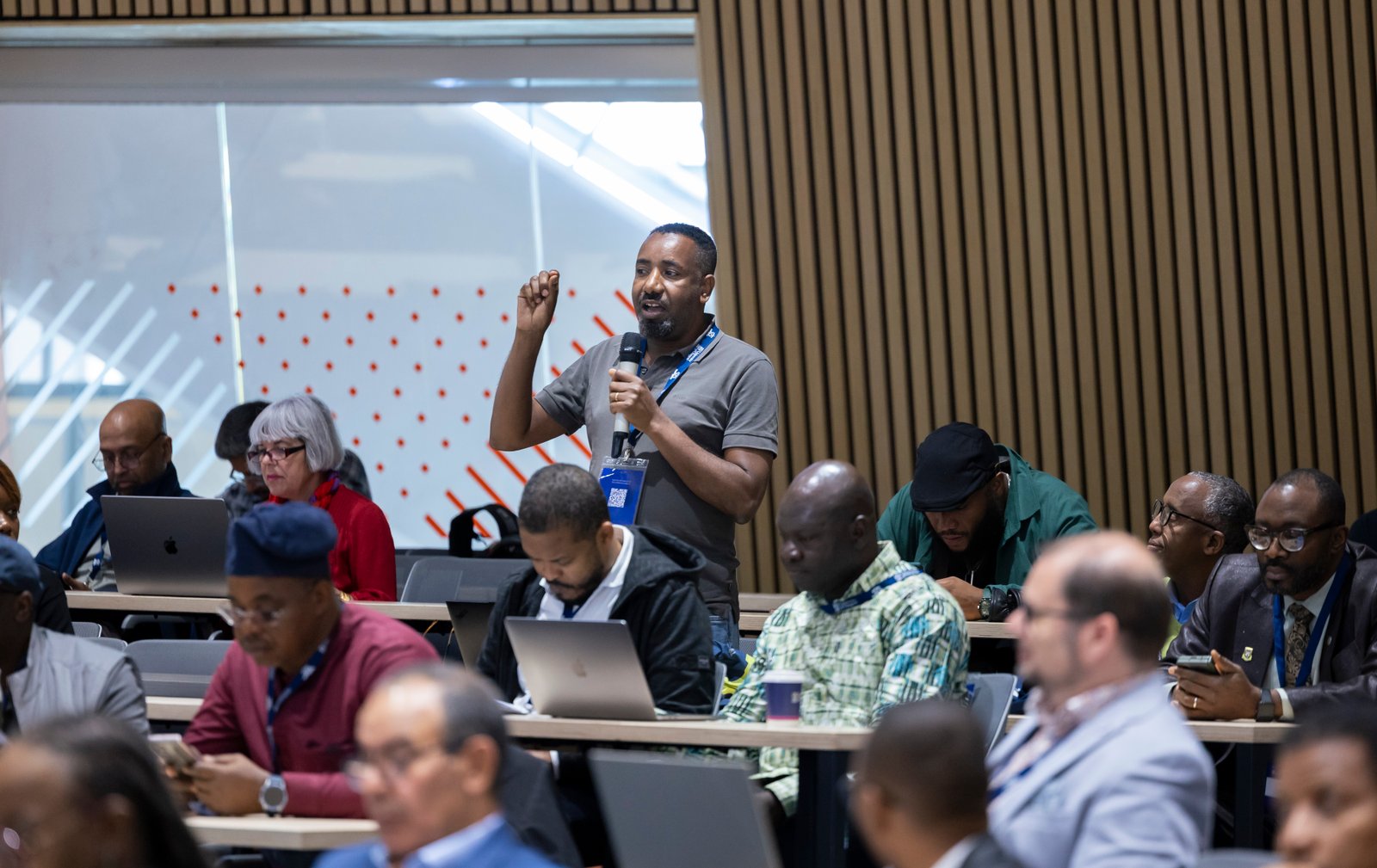
The four-day programme featured plenary sessions, strategic meetings, and workshops that provided opportunities for partners to exchange ideas, strengthen cross-border collaborations, and identify emerging areas for joint research and innovation. As the CoRE initiative marked its third year, the conference also provided an important platform for partners to reflect on institutional progress, assess achievements, and explore new pathways for collaborative research.
The conference further marked significant milestones for the host institutions, coinciding with the University of Glasgow’s 575th anniversary and The Guild’s 10th anniversary. These milestones provided an opportunity to celebrate shared achievements while reaffirming a collective commitment to building equitable and sustainable international research partnerships.
Dr Dinko’s participation highlights LITD’s continued engagement in international research networks and its commitment to strengthening collaborative research and training in infectious diseases. Through initiatives such as CoRE AID, these partnerships provide opportunities to build research capacity, foster interdisciplinary collaboration, and contribute to addressing infectious disease challenges across Africa and beyond.